
Guest Author – Kirsty Heath, Founder Co Thought Digital
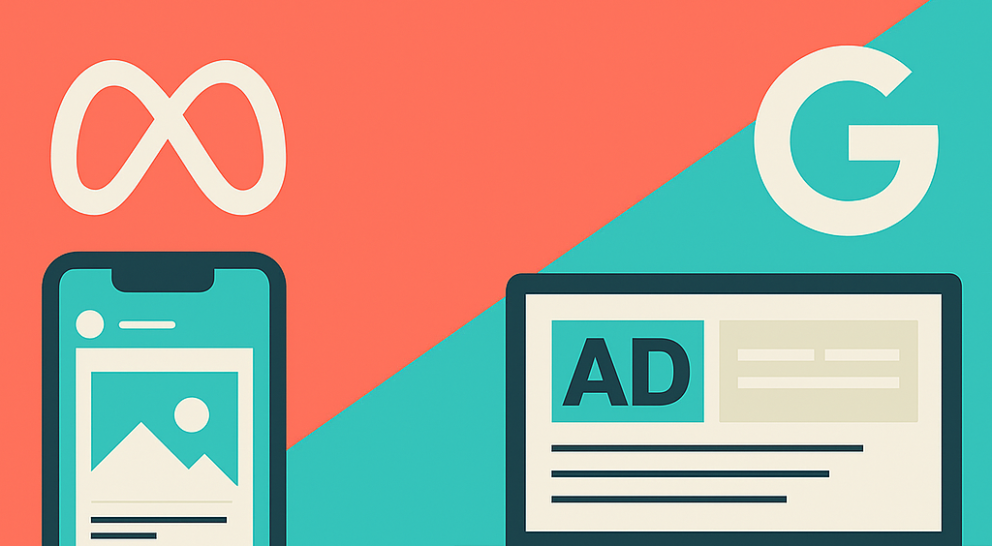
For many small businesses, Meta’s family of platforms and Google’s ad network remain the most reliable ways to acquire customers. The challenge is prioritising spend when budgets, time and creative resources are limited. This guide outlines when each channel tends to perform best, and how to combine them as you scale.
Start with the customer moment, not the platform.
· Demand creation: Reaching people who were not actively looking but are likely to be interested. Meta’s visual environments (Reels, Stories, Feeds) excel here.
· Demand capture: Converting customers already searching for products like yours. Google’s Search and Shopping formats are built for this.
Why Meta and Google Ads still dominate
· Meta: There are over 3.98 billion monthly active users on Meta’s platforms (Facebook, Instagram, Messenger and WhatsApp).
· Google: Over 8.5 billion searches occur daily. Search and Shopping reach customers close to a decision, while YouTube and Display extend coverage for research and remarketing.
When Meta should lead your plan.
Choose Meta if most of the following apply:
· Your product is visually compelling or new-to-market and benefits from short-form video or lifestyle imagery.
· You are launching a brand, entering a new market, or need to build awareness quickly.
· You can produce a steady cadence of creative (even simple, well-lit user generated content and product demos).
· Your margin can support a few touchpoints before purchase.
Examples of how you could use Meta Ads:
· Artisan candle studio: 12-15 second Reels showing fragrance stories and burn quality to build interest. A follow-up carousel featuring a limited seasonal drop converts browsers.
· Sustainable gym leisure label: Try-on clips and quick fit tips to increase brand awareness and to encourage follows; ads could be later used to show the exact items viewed to close the sale.
Strengths:
· Effective targeting.
· Flexible formats (Reels, Stories, Feed, Messenger).
· Strong remarketing using website visitors, engagers and email lists.
Considerations:
· Creative volume matters. Plan for ongoing content production or repurposing reviews.
· Ensure ad fatigue does not occur.
When Google should lead your plan
Choose Google first if most of the following apply:
· There is consistent search demand for your category or brand.
· You want efficient, bottom-of-funnel sales with limited creative production.
· You have a mobile responsive, optimised landing page to use as a landing page.
Examples of how you could use Google Ads:
· Pet supplements brand: “Grain-free hip and joint chews” queries convert reliably through Shopping; branded Search protects your name affordably.
· Home repair retailer: “Replacement mixer tap cartridge” clicks cost more than social but convert at a higher rate because intent is buy-ready.
Strengths:
· High-intent traffic
· Broad reach via YouTube, Gmail and partner sites for remarketing and education.
Considerations:
· Competition can drive up CPCs. Separate brand vs non-brand, use negatives, and focus on profitable keyword clusters.
Costs and ROI: what to expect
· Meta: Often lower CPCs and CPMs, but buyers may require multiple exposures. Factor in creative production and the value of audience- building (email/SMS, remarketing).
· Google: Typically, higher CPCs but stronger conversions rates from in-market shoppers. Clean feeds and well-structured campaigns are essential to maintain efficiency.
Targeting and formats at a glance
· Meta: Interest and behaviour-based targeting, lookalikes from high-value customers, and custom audiences from website visitors and mailing lists. Formats include Fees, Stories, Reels and Messenger placements.
· Google: Keyword intent on Search, product data on Shopping, and audience signals (interests, demographics) for YouTube and Performance Max. Formats include text ads, Shopping listings, YouTube video, Gmail and Display.
The most effective ad strategy for a small business is the one aligned with your buyer’s moment: use Meta to create demand when shoppers aren’t yet searching, and use Google to capture demand when they are. The strongest results typically come from using both in tandem. Meta is effective for discovery and audience building while Google is more effective for high-intent searches.
Download your free Meta Ads starter kit and your free Google Ads toolkit.
About the author – Co Thought Digital
Co Thought Digital is a performance marketing for small to mid-sized businesses. We design and manage Meta and Google Ad campaigns that spark discovery, convert high-intent traffic, and improve return on ad spend.
Find out more at www.cothoughtdigital.com or for enquiries, email hello@cothoughtdigital.com. For updates and tips, follow us on Instagram or Facebook.